 Make an appointment
 log in
+998 (55) 508-50-00 Call-center
28.02.2025
Day two of the endocrinologist education master class: clinical cases, ketoacidosis and treatment strategies
An educational program for endocrinology physicians
Date: February 27, 2025
Place: Fergana city
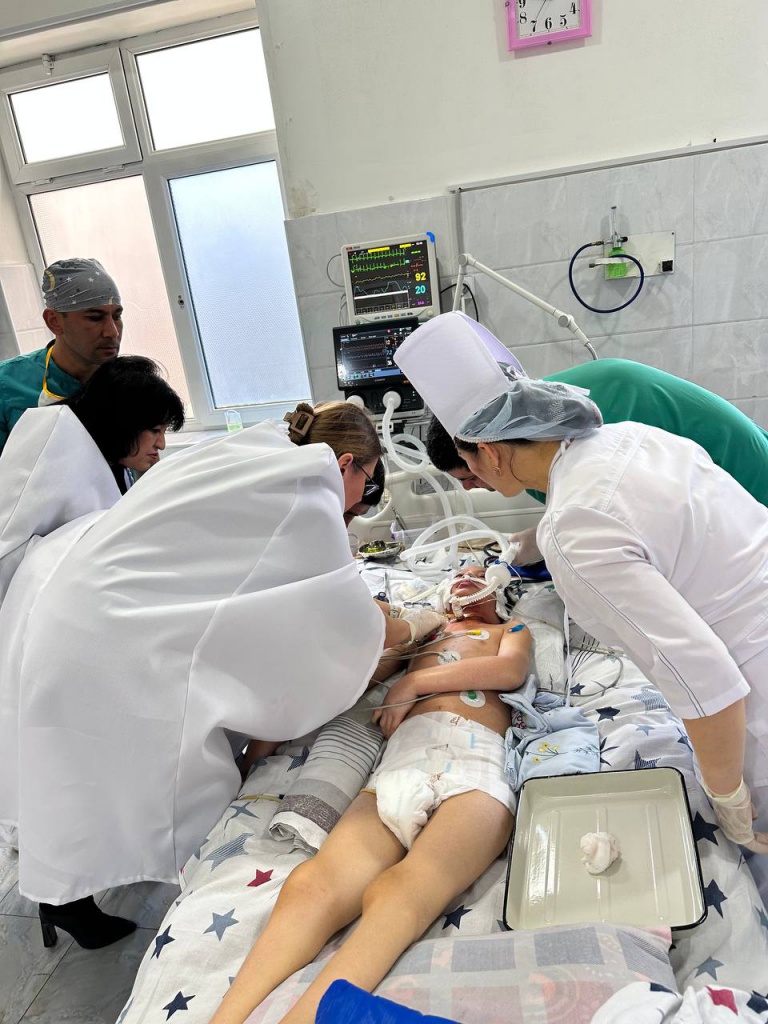
If the first day of training was devoted to the theory and algorithms of therapy of type 2 diabetes mellitus, the second day turned into a real physician consilium with immersion in practical medicine. We started the day in the place where decisions that determine the life and health of patients are made - in the intensive care unit.
Case studies: the fight for life
From the first minutes we found ourselves in the center of real medical challenges. The analysis of severe cases of diabetic ketoacidosis (DKA) showed how important it is not only to diagnose this formidable complication in time, but also to choose the right treatment strategy.
Each case was analyzed in great detail:
- What was the trigger for ketoacidosis?
- How quickly was the diagnosis made?
- What mistakes were made in patient management?
- What sugar-lowering medications were prescribed before hospitalization, and could the crisis have been prevented?
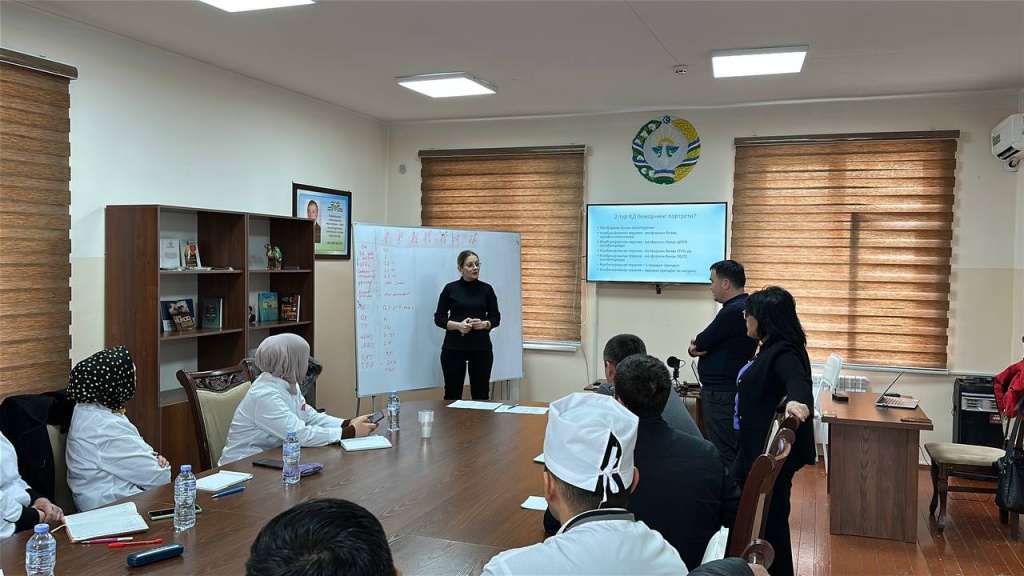
Under the guidance of Anna Alieva and Nasiba Usmanovna Alimova, doctors analyzed patient portraits, comparing what factors influence the choice of therapy.
Each patient is unique, and it is the individual approach that is the key to success..
From metformin to insulin: how to prescribe sugar-lowering therapy correctly?
After analyzing intensive care cases, we moved on to discussing outpatients. The participants of the master class analyzed the role of each class of sugar-lowering drugs in the treatment of type 2 diabetes:
Metformin is the mainstay of therapy, but is it always appropriate? How to combine it correctly with other classes of drugs?
SGLT-2 inhibitors - indispensable in heart failure, but how to avoid side effects?
GTP-1 receptors and their place in the treatment of obesity diabetes - why are these drugs becoming the gold standard?
Insulin therapy - when and who really needs it?
Treatment tactics depending on the patient's age and comorbidities were discussed:
- How to treat diabetes in elderly patients to avoid the risk of hypoglycemia?
- Which regimens are preferable in patients with chronic renal failure?
- How to properly prescribe sugar-lowering drugs in patients with coronary heart disease?
Conclusion of the day: practical medicine is the art of balance
The second day of the master class showed that diabetes treatment is not just about prescribing drugs, but the art of finding a balance between the effectiveness and safety of therapy.
Physicians gained real clinical experience by solving complex cases from practice.
Participants saw how theory turns into practice - from diagnosis to choice of therapy.
Clear strategies for managing patients with diabetes and comorbid conditions were formed.
It was a day of in-depth analysis, questions, discussion and professional growth. Tomorrow is the continuation: diabetic nephropathy, polyneuropathy and final testing.
Follow our updates - the future of diabetology is being created here and now!



Day two of the endocrinologist education master class: clinical cases, ketoacidosis and treatment strategies
An educational program for endocrinology physicians
Date: February 27, 2025
Place: Fergana city
If the first day of training was devoted to the theory and algorithms of therapy of type 2 diabetes mellitus, the second day turned into a real physician consilium with immersion in practical medicine. We started the day in the place where decisions that determine the life and health of patients are made - in the intensive care unit.
Case studies: the fight for life
From the first minutes we found ourselves in the center of real medical challenges. The analysis of severe cases of diabetic ketoacidosis (DKA) showed how important it is not only to diagnose this formidable complication in time, but also to choose the right treatment strategy.
Each case was analyzed in great detail:
- What was the trigger for ketoacidosis?
- How quickly was the diagnosis made?
- What mistakes were made in patient management?
- What sugar-lowering medications were prescribed before hospitalization, and could the crisis have been prevented?
Under the guidance of Anna Alieva and Nasiba Usmanovna Alimova, doctors analyzed patient portraits, comparing what factors influence the choice of therapy.
Each patient is unique, and it is the individual approach that is the key to success..
From metformin to insulin: how to prescribe sugar-lowering therapy correctly?
After analyzing intensive care cases, we moved on to discussing outpatients. The participants of the master class analyzed the role of each class of sugar-lowering drugs in the treatment of type 2 diabetes:
Metformin is the mainstay of therapy, but is it always appropriate? How to combine it correctly with other classes of drugs?
SGLT-2 inhibitors - indispensable in heart failure, but how to avoid side effects?
GTP-1 receptors and their place in the treatment of obesity diabetes - why are these drugs becoming the gold standard?
Insulin therapy - when and who really needs it?
Treatment tactics depending on the patient's age and comorbidities were discussed:
- How to treat diabetes in elderly patients to avoid the risk of hypoglycemia?
- Which regimens are preferable in patients with chronic renal failure?
- How to properly prescribe sugar-lowering drugs in patients with coronary heart disease?
Conclusion of the day: practical medicine is the art of balance
The second day of the master class showed that diabetes treatment is not just about prescribing drugs, but the art of finding a balance between the effectiveness and safety of therapy.
Physicians gained real clinical experience by solving complex cases from practice.
Participants saw how theory turns into practice - from diagnosis to choice of therapy.
Clear strategies for managing patients with diabetes and comorbid conditions were formed.
It was a day of in-depth analysis, questions, discussion and professional growth. Tomorrow is the continuation: diabetic nephropathy, polyneuropathy and final testing.
Follow our updates - the future of diabetology is being created here and now!